Wrappers, Rankings, and Rules: Building Britain's Optimal Tax-Efficient Investment Stack
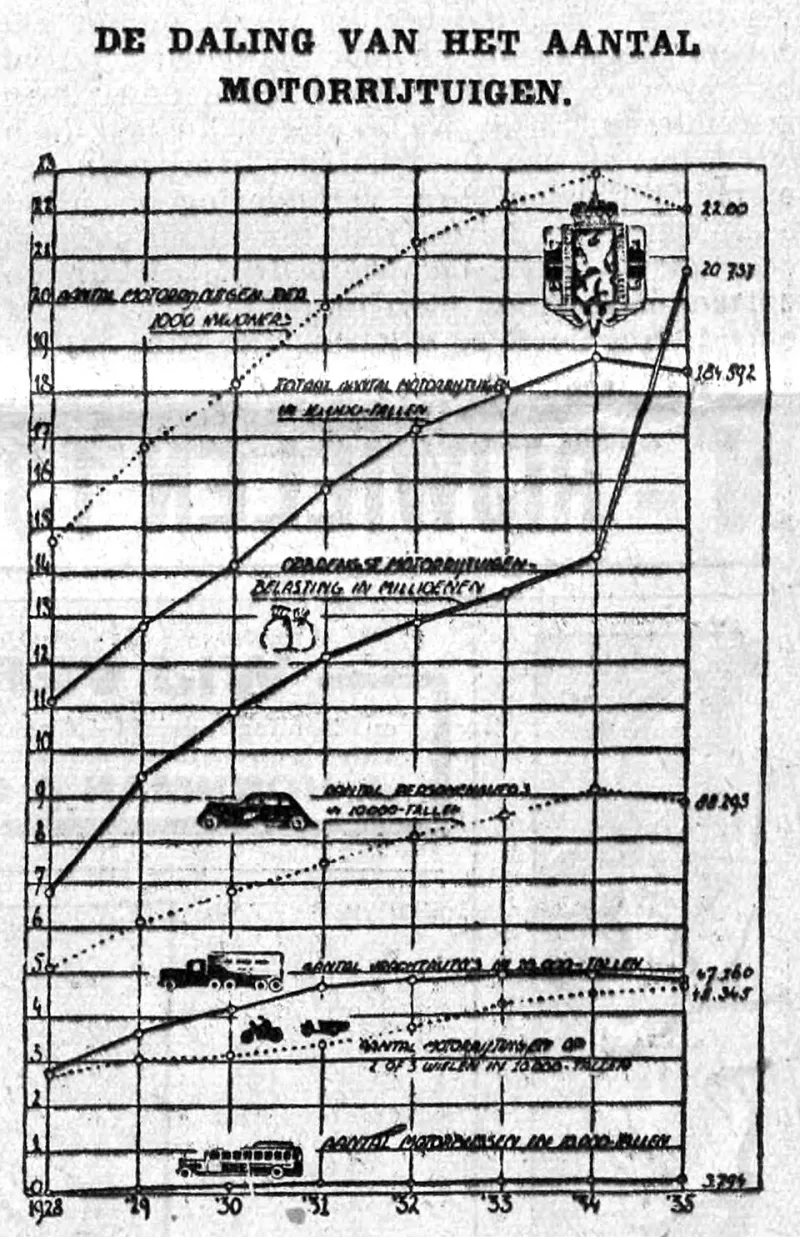
Photo: Anonieme medewerker van CBS, Public domain, via Wikimedia Commons
Britain's tax-advantaged savings landscape is, to put it charitably, complicated. HMRC offers a suite of sheltered investment vehicles, each with its own contribution limits, access rules, tax treatment, and ideal use case. Most investors interact with these products in isolation — opening an ISA here, contributing to a workplace pension there, perhaps maintaining a Premium Bond holding for liquidity — without ever considering how they function as a coordinated system.
That fragmented approach leaves significant tax efficiency on the table. This guide builds the case for thinking about your tax-advantaged accounts not as separate decisions, but as a single, strategically sequenced stack — one that you build deliberately, layer by layer, according to your life stage and financial goals.
Understanding the Landscape: What Each Wrapper Actually Does
Before ranking the options, it is worth ensuring the fundamental mechanics are clear.
Pensions (including SIPPs and workplace schemes) offer upfront tax relief on contributions at your marginal income tax rate. A basic-rate taxpayer contributing £800 effectively receives £1,000 in their pension pot after HMRC adds 20% relief. Higher-rate taxpayers can claim an additional 20% through self-assessment, making the effective cost of a £1,000 pension contribution just £600. Growth within the pension is sheltered from income tax and capital gains tax. The trade-off is access: you cannot draw from a pension until age 57 (rising to 57 in 2028 under current legislation), and withdrawals above the 25% tax-free lump sum are taxed as income.
Stocks-and-Shares ISAs shelter up to £20,000 per tax year from both income tax and capital gains tax, with no upfront relief on contributions. The critical distinction from pensions is flexibility: ISA funds are accessible at any time, without penalty. Growth and withdrawals are entirely tax-free. There is no lifetime allowance to navigate (a consideration that became more prominent following the 2023 Budget changes to pension lifetime allowance rules), and unused allowances cannot be carried forward.
Cash ISAs function identically to stocks-and-shares ISAs in tax terms but hold cash rather than investments. In an inflationary environment, the real return on cash ISAs is often negative after inflation is accounted for, making them most appropriate as short-term emergency fund vehicles rather than long-term wealth-building tools.
Premium Bonds, issued by NS&I and backed by HM Treasury, offer prize draws rather than conventional interest. Prizes are entirely tax-free, and the capital is 100% secure and accessible instantly. The effective 'interest rate' fluctuates — currently sitting at a prize rate of 4.40% as of early 2025 — but this is a statistical average, and individual returns vary significantly depending on luck.
Lifetime ISAs (LISAs) deserve a specific mention for younger investors. Available to those aged 18 to 39, LISAs offer a 25% government bonus on contributions up to £4,000 per year — effectively a 25% uplift on savings directed towards a first home purchase or retirement after age 60. The significant caveat is a 25% withdrawal penalty for any other purpose, which can leave investors worse off than if they had never contributed.
The Strategic Hierarchy: Sequencing Your Contributions
With the mechanics established, the question becomes: in what order should a UK investor prioritise these vehicles? The answer depends on individual circumstances, but the following hierarchy holds true for the majority of working-age British investors.
Step One: Capture Your Full Employer Pension Match
If your employer offers matching contributions to a workplace pension scheme, this is categorically the highest-return 'investment' available to you. A common structure might see your employer match contributions up to five per cent of salary — meaning that for every £100 you contribute, your employer adds another £100. This represents an immediate 100% return before any investment growth occurs. Failing to contribute enough to capture the full match is, in straightforward terms, leaving part of your salary uncollected.
Step Two: Consider the LISA (If Eligible and Applicable)
For investors under 40 who are either saving for a first home or content to lock funds away until 60, the 25% government bonus on LISA contributions is extraordinarily generous. The £4,000 annual limit yields up to £1,000 in free government money per year. However, the severe withdrawal penalty means this vehicle is unsuitable for funds you may need before retirement or a property purchase.
Step Three: Max Out Your Stocks-and-Shares ISA
Once employer pension matching is secured, the ISA's combination of flexibility, tax-free growth, and tax-free withdrawal makes it the workhorse of most investors' portfolios. The £20,000 annual allowance is generous enough to accommodate serious wealth-building, and the absence of withdrawal restrictions makes it invaluable as a bridge between retirement and pension access age, or as a source of tax-free income in early retirement.
Step Four: Increase Pension Contributions for Higher Earners
For higher-rate and additional-rate taxpayers, the upfront tax relief on pension contributions becomes increasingly compelling at higher income levels. A 40% taxpayer who maximises pension contributions is effectively receiving a 67% uplift on the net cost of each contribution (contributing £600 to secure £1,000 in the pension). The annual allowance for pension contributions stands at £60,000 for the 2024/25 tax year (or 100% of earnings, whichever is lower), with carry-forward provisions allowing unused allowance from the three preceding tax years to be utilised.
Step Five: Premium Bonds for Emergency Reserves
Premium Bonds are not an investment vehicle in any meaningful sense — they are a tax-efficient savings instrument. Their proper place in the hierarchy is as a home for emergency funds and short-term cash reserves, where the combination of capital security, instant access, and tax-free prizes makes them competitive with — and in some cases superior to — conventional savings accounts for higher and additional-rate taxpayers who have already exhausted their personal savings allowance.
Hidden Gotchas Worth Knowing
Several common errors erode tax efficiency in ways that are easily avoided with awareness.
The tapered annual allowance reduces the pension contribution limit for high earners — those with adjusted income above £260,000 — potentially to as little as £10,000. Investors approaching this threshold should take professional advice before maximising pension contributions.
The money purchase annual allowance (MPAA) is triggered the moment you begin flexibly drawing from a defined contribution pension. Once activated, it restricts future pension contributions to just £10,000 per year — a significant constraint for those who return to work after early retirement.
ISA transfers between providers must be executed through the official transfer process, not by withdrawing and redepositing. Withdrawing from an ISA and redepositing in the same tax year counts against your annual allowance unless the ISA has a 'flexible' designation.
LISA penalties in practice can return less than the original contribution in some scenarios, not merely the bonus. Investors who contribute to a LISA and subsequently need the funds for a purpose other than a qualifying home purchase or retirement should model the actual penalty impact carefully.
Building Your Stack
The most tax-efficient portfolio is not necessarily the one with the highest gross returns. It is the one that minimises the portion of those returns surrendered to HMRC over a lifetime. By treating ISAs, pensions, and supplementary vehicles as a coordinated system rather than a collection of individual accounts, British investors can meaningfully extend the purchasing power of their accumulated wealth.
Review your current contribution levels against this hierarchy annually — ideally at the start of each new tax year in April. Adjust as your income, tax band, and life stage evolve. And where the complexity of tapering, carry-forward, or lifetime allowance considerations becomes significant, the cost of qualified financial advice is almost invariably recovered many times over in tax savings.
The wrapper is not the strategy. But choosing the right wrapper — in the right order — is one of the most consequential financial decisions a modern British investor can make.